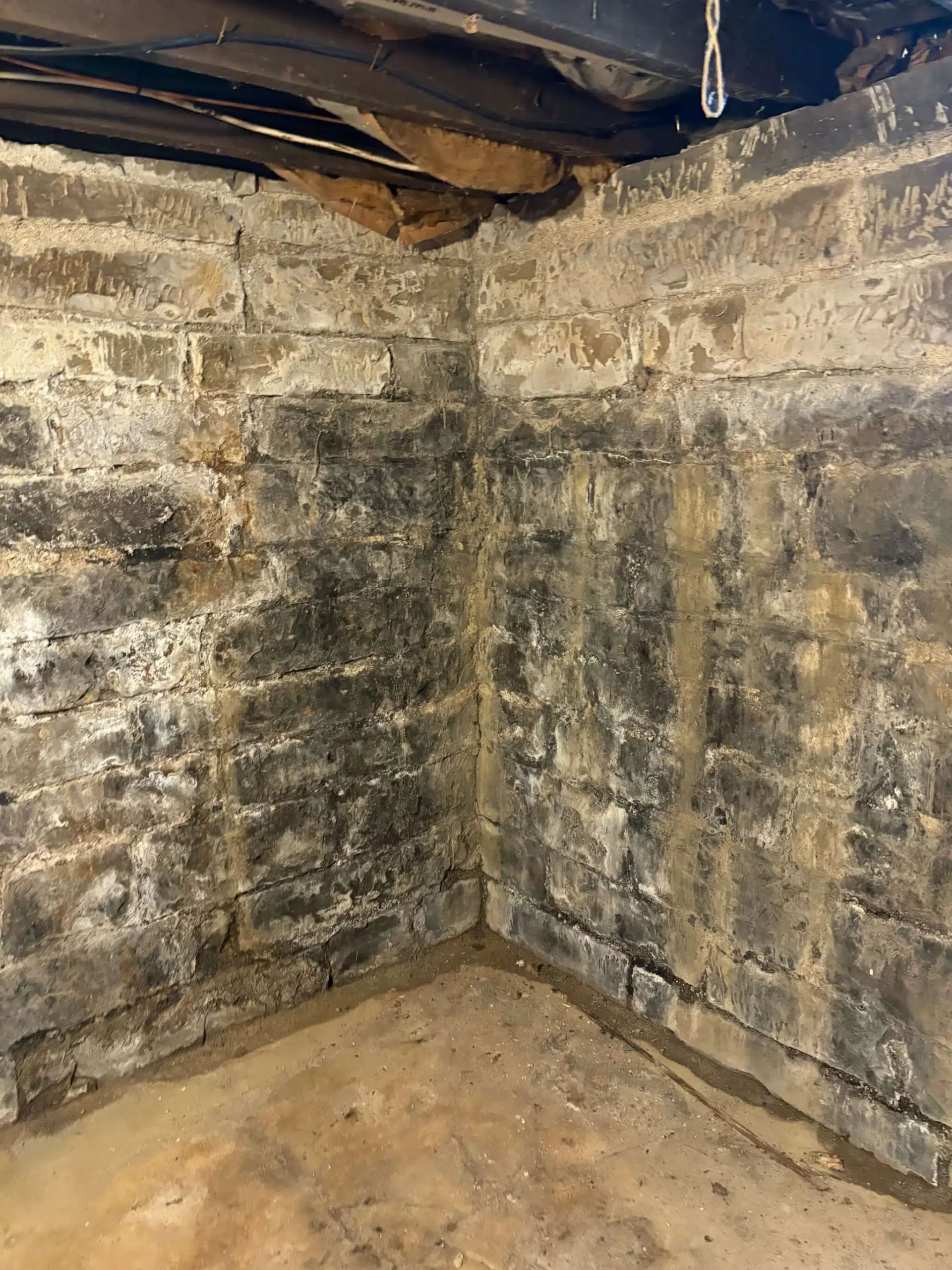
Most basement water problems don’t announce themselves with a flood. They start subtle — a musty smell, a white powder on the wall, a small damp patch after rain. By the time homeowners notice, the damage has often been building for months or years.
This guide covers the 12 most reliable warning signs that your basement has a moisture or water intrusion problem — and what each one tells you about the underlying cause.
Why Early Detection Matters
Water damage compounds. A small crack that leaks a quart of water per rain event will widen over time as freeze-thaw cycles expand it. Mold begins growing on wet surfaces within 24–48 hours. Wood rot can compromise floor joists within 1–2 years of sustained moisture exposure. Catching problems early reduces repair costs by 60–80% in most cases.
The 12 Warning Signs
1. Efflorescence (White Chalky Deposits)
Efflorescence is the white or gray chalky crust that forms on concrete or block walls. It’s caused by water carrying dissolved minerals (calcium, magnesium, sodium) through the wall. When the water evaporates, the minerals crystallize on the surface.
What it tells you: Water is passing through your foundation wall. The wall itself is porous or cracked. This is a reliable indicator of hydrostatic pressure from soil on the outside.
Severity: Low to moderate. Efflorescence itself doesn’t cause structural damage, but it confirms active water movement through the wall that needs to be addressed.
2. Musty or Earthy Odor
That classic “basement smell” is actually the odor of mold, mildew, and organic material decomposing in a high-moisture environment. You can’t see mold yet, but if you smell it, it’s there — likely behind drywall, under carpet, or in the insulation.
What it tells you: Relative humidity in your basement is consistently above 60–70%, enabling mold growth. The source could be wall leaks, floor seepage, condensation, or poor ventilation.
3. Staining on Walls or Floor
Brownish or rust-colored stains at or near the base of foundation walls typically indicate water entry at the wall-floor joint — the most common point of entry in poured concrete basements. The stain pattern tells you a lot:
- Horizontal stain line at a consistent height → past flooding to that level
- Vertical streak → crack in the wall above
- Stain around a window well → window well drainage failure
- Stain at the cove joint (where wall meets floor) → hydrostatic pressure seepage
4. Peeling Paint or Blistering
Paint blisters and peels when moisture vapor pushes through the wall from the exterior. This happens even when the wall looks and feels dry to the touch — the moisture is vapor, not liquid water. Basement walls painted with standard interior paint are especially prone to this.
Important note: Applying more paint on top of peeling basement paint is not a fix. Waterproofing paint like Drylok can slow vapor transmission but won’t solve an active leak.
5. Cracks in Walls or Floor
Not all cracks are equal. Here’s how to read them:
| Crack Type | What It Means | Urgency |
|---|---|---|
| Hairline vertical crack | Normal concrete shrinkage | Monitor |
| Diagonal crack (45°) from corner | Differential settlement | Moderate |
| Horizontal crack | Lateral soil pressure — structural issue | High — call a pro |
| Stair-step crack in block wall | Mortar joint failure, settlement | Moderate to High |
| Crack with water seeping through | Active water intrusion | High |
6. Rust Stains Around Floor Drains or Pipes
Rust stains around floor drains can indicate that the drain is backing up or that water is flowing through it more than it should. Rust around pipe penetrations through the foundation wall suggests water is getting in at those entry points.
7. Damp or Wet Spots After Rain
If you notice damp patches or puddles that appear within 12–24 hours of heavy rain, you have an active exterior water issue — poor grading, clogged gutters, or failed window well drains. This is the most direct sign, and also the most actionable: fix the drainage problem first before any interior waterproofing.
8. Condensation on Walls or Pipes
Condensation happens when warm, humid air contacts a cold surface. It’s different from a wall leak — and easy to confuse. Here’s a simple test:
The tape test: Tape a 12-inch square of plastic sheeting to a damp wall. Seal all four edges. Wait 24 hours. If moisture appears on the outside of the plastic (between plastic and room air), it’s condensation. If moisture appears behind the plastic (against the wall), it’s seepage from outside.
Condensation alone is managed with dehumidification and ventilation. Seepage requires waterproofing.
9. Mold or Mildew Visible Growth
Black, green, or white fuzzy growth on walls, wood framing, or stored items is active mold. This is a serious indoor air quality issue — mold spores circulate through your HVAC system to the rest of the house. Do not disturb mold without proper protection (N95 mask minimum, gloves, eye protection). For areas larger than 10 square feet, hire a certified mold remediation contractor.
10. Buckled or Warped Flooring
Finished flooring — carpet, laminate, hardwood over a basement slab — that buckles, warps, or shows dark staining underneath indicates water coming up through the slab or in at the perimeter. This usually indicates a high water table or failed sump pump system.
11. Rotting Wood (Sill Plates, Floor Joists)
Press a screwdriver or awl into the sill plate (the wood beam sitting on top of the foundation wall) and into the floor joists nearest the foundation. If it sinks in easily, the wood is rotted. This indicates long-term high humidity or direct water contact — and it’s a structural issue that needs immediate attention from a contractor.
12. A Sump Pump That Runs Constantly
A sump pump that cycles on and off frequently — or runs almost continuously — during or after rain indicates significant groundwater intrusion. The pump is handling the water, but it’s working hard. You should:
- Confirm the pump discharges water away from the house foundation (not back toward it)
- Install a battery backup sump pump — a power failure during a storm could flood your basement within hours
- Consider whether your drainage system is adequate for your water table situation
What to Do After Identifying the Signs
After identifying which warning signs apply to your basement:
- Photograph everything — document stains, cracks, and mold for insurance and contractor quotes
- Check the outside first — confirm gutters are clear, downspouts extend 6+ feet from the foundation, and the ground slopes away from the house
- Do the tape test on any damp walls to distinguish condensation from seepage
- Get 3 contractor quotes before any work — waterproofing pricing varies enormously
Next Steps
Once you’ve identified the signs, the next step is understanding what’s causing them — and which solution fits your situation. Read our guides on DIY basement waterproofing options, interior drainage systems, and how much basement waterproofing costs.
Leave a Reply