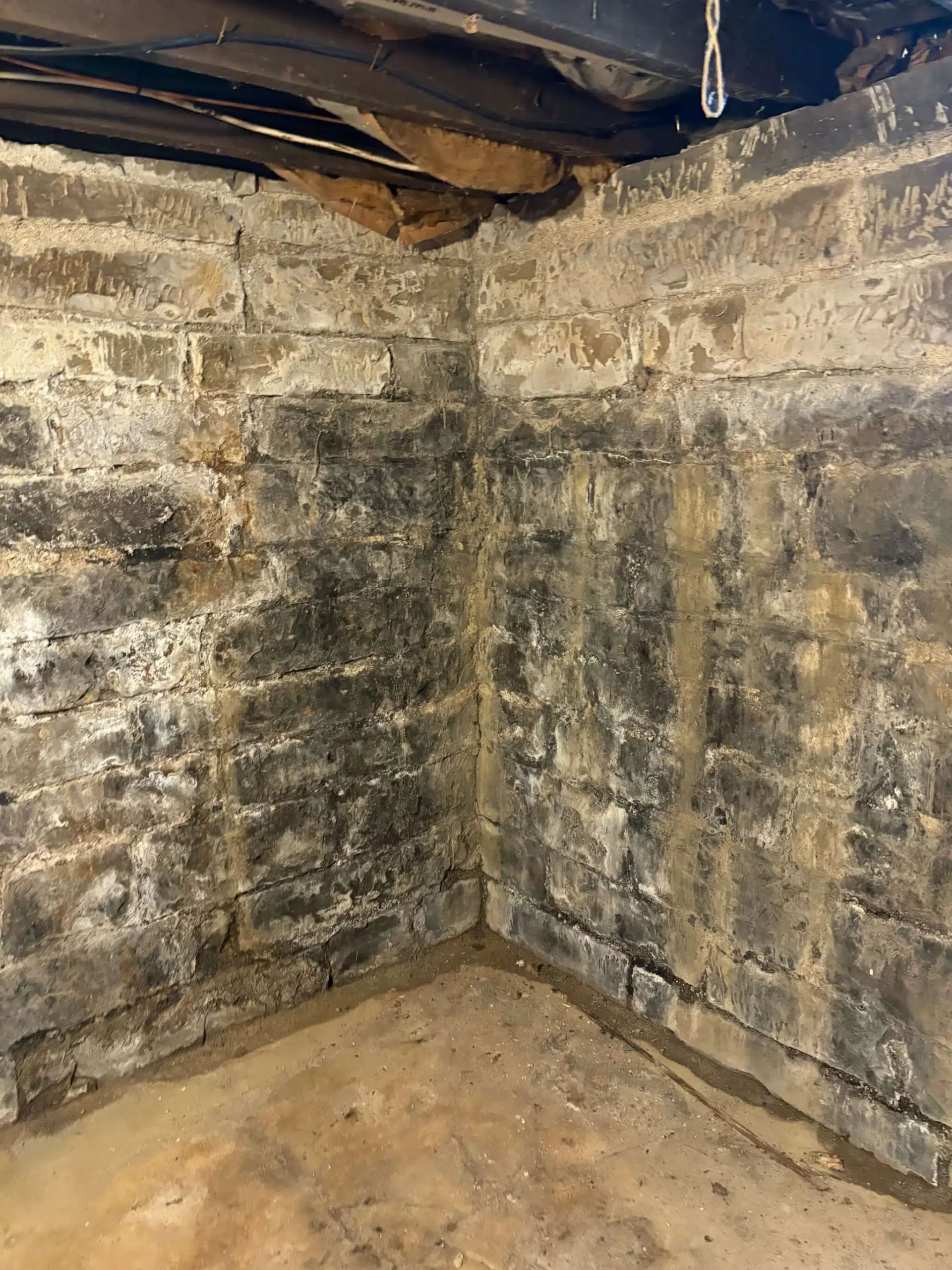
Category: Diagnose the Problem

Identify water intrusion types, moisture sources, and structural issues in your basement.

  • Basement Water Seeping Through Walls After Rain: Causes and Fixes

    Basement Water Seeping Through Walls After Rain: Causes and Fixes

    Water seeping through basement walls after rain is one of the most common complaints from U.S. homeowners — and one of the most misdiagnosed. The water you see on the inside isn’t always coming from the direction you think.

    Why Basement Walls Leak After Rain

    There are four main pathways water takes to enter a basement through or around walls:

    1. Hydrostatic Pressure

    When rain saturates the soil around your foundation, water pressure builds against the exterior wall. Concrete is porous — water under pressure will push through it. The wetter the soil and the longer it stays saturated, the higher the pressure. Clay-heavy soils hold water longest and create the most persistent pressure.

    Signs: Seepage appears at the wall-floor joint (cove joint), or weeps through the face of the wall uniformly rather than at a specific crack.

    2. Cracks in the Foundation Wall

    Even hairline cracks in poured concrete walls provide a direct path for water under pressure. Cracks can result from normal concrete shrinkage during curing (very common, usually not structural), settlement, tree root pressure, or thermal expansion and contraction over years of freeze-thaw cycles.

    Signs: Water enters at a specific visible crack, often with a trail of staining or efflorescence marking the path.

    3. Window Well Overflow

    Basement windows below grade are surrounded by a window well — a curved metal or plastic retaining wall that’s supposed to hold gravel or a drain to manage water. When the drain clogs or the well fills with debris, water pools against the window frame and leaks through.

    Signs: Water appears specifically around or below a basement window. Usually correlates with heavy rain rather than persistent moisture.

    4. Failed Exterior Waterproofing

    Most homes built before 1980 were waterproofed on the exterior with either tar-based coatings or a simple drainage layer. These materials degrade over 20–30 years, leaving the foundation wall exposed to direct water contact.

    How to Diagnose Which Type You Have

    Before spending money on repairs, identify the entry point:

    1. After rain, go to the basement immediately and mark where water appears with chalk or tape. Note the time and how long after rain the seepage starts.
    2. Check the window wells for standing water or debris.
    3. Look for cracks and trace any staining above them to see if it lines up with a specific entry point.
    4. Check the grading outside — if the ground slopes toward the house, water may be pooling at the foundation before soaking in.

    Solutions by Cause

    For Hydrostatic Pressure Seepage

    • Interior French drain system with sump pump (most reliable fix)
    • Exterior excavation and new waterproofing membrane (most comprehensive but expensive)
    • Improve exterior drainage: regrade the yard, extend downspouts, add swales

    For Wall Cracks

    • Polyurethane or epoxy crack injection (DIY-able for non-structural cracks under 1/4 inch wide)
    • Carbon fiber straps or steel I-beams for bowing walls with horizontal cracks
    • Exterior crack repair during excavation for severe cases

    For Window Well Issues

    • Clear the drain at the bottom of the well
    • Add a cover to keep debris and rain out
    • Replace the gravel (should be 3–4 inches deep at minimum)
    • Install a window well drain connected to the interior drainage system

    What Not to Do

    A common mistake is applying waterproofing paint (Drylok or similar) to the interior of a leaking wall. These products can slow moisture vapor transmission, but they cannot withstand hydrostatic pressure. Water will eventually find another path, and the paint will peel. Interior sealers are not a solution for active seepage — they’re a vapor barrier for condensation issues.

    When to Call a Professional

    Get a professional opinion if:

    • You have horizontal cracks in any foundation wall (structural issue)
    • You see bowing or inward movement of the wall
    • Seepage is widespread across multiple walls
    • The water entry is at or near the footing level

    See our guide to hiring a waterproofing contractor and what fair prices look like in your region.

  • Basement Humidity Levels: What’s Normal and When to Act

    Basement Humidity Levels: What’s Normal and When to Act

    High humidity is the most overlooked basement moisture problem. Unlike a visible leak, elevated relative humidity causes damage silently — rotting wood, growing mold, and corroding metal — before you ever see or smell anything unusual.

    What Is “Normal” Basement Humidity?

    The target relative humidity (RH) range for a basement is 30–50% year-round. Here’s what happens outside that range:

    RH LevelConditionTypical Issues
    Below 30%Too dryWood shrinkage, cracking, static electricity
    30–50%IdealNo moisture issues
    50–60%ElevatedDust mites thrive, slight mold risk
    60–70%HighActive mold growth likely
    Above 70%DangerousRapid mold, wood rot, pest attraction

    Seasonal Patterns

    Basement humidity varies significantly by season in most U.S. climates:

    • Winter: Often drier (cold air holds less moisture). If you have a high-efficiency furnace exhausting through the basement, it pulls air in from outside, which is cold and dry.
    • Spring: Humidity rises as snow melts and rain saturates the soil. Basement humidity can spike to 70–80% during April–May in northern states.
    • Summer: Peak risk. Warm, humid outdoor air enters the basement and cools, dramatically raising relative humidity. Opening basement windows in summer makes this worse, not better.
    • Fall: Usually improving, but heavy fall rains can cause spikes similar to spring.

    How to Measure Basement Humidity

    Get a digital hygrometer (also called a humidity meter). Accurate models cost $10–$25 on Amazon. Place it in the middle of the basement, not near a dehumidifier or HVAC vent. Check it during:

    • A dry period (baseline)
    • During or 24 hours after heavy rain
    • A hot, humid summer day (July/August in most states)

    Log the readings for 2–3 weeks to understand your pattern before buying equipment.

    Three Sources of High Basement Humidity

    1. Water Vapor Through the Foundation

    Even a dry-looking concrete foundation wall transmits water vapor from the moist soil outside. This is the primary driver of summer humidity spikes in many basements. You can’t stop it entirely, but interior vapor barriers on walls and a properly sealed slab can reduce it significantly.

    2. Outdoor Air Infiltration

    Warm outdoor air in summer contains far more moisture than the cooler air in your basement. When this warm air enters through cracks, windows, or the door, it cools and the humidity goes up sharply. Counterintuitively, sealing the basement from outdoor air during humid months dramatically reduces humidity levels.

    3. Interior Moisture Sources

    Don’t overlook sources inside the basement: an unvented clothes dryer, a leaking hot water tank, standing water in a sump pit, or even a large number of plants can contribute meaningfully to basement humidity.

    The Fix: Dehumidifier Sizing Guide

    A properly sized dehumidifier is the most cost-effective solution for high basement humidity when there’s no active leak. Sizing is based on square footage and severity:

    Basement SizeModerately Humid (50–60%)Very Humid (above 60%)
    500 sq ft30-pint unit50-pint unit
    1,000 sq ft50-pint unit70-pint unit
    1,500 sq ft70-pint unit70-pint + second unit
    2,000 sq ft70-pint unitTwo 70-pint units

    Note: Since 2012, pint ratings were recalibrated. A “70-pint” unit sold today is roughly equivalent to a “50-pint” unit sold before 2012. Check AHAM certification labels for actual performance data.

    Energy Cost of Running a Dehumidifier

    A 70-pint dehumidifier running 12 hours/day uses approximately 700–900 watts, costing roughly $1.50–$2.50/day at average U.S. electricity rates. Running one from May through September costs about $225–$375. This is far less than the cost of mold remediation ($1,500–$5,000) or wood rot repairs ($2,000+).

    If you’re dealing with active leaks rather than just humidity, read about interior waterproofing systems as a more comprehensive solution.

  • How to Tell If Your Basement Has a Water Problem: 12 Warning Signs

    How to Tell If Your Basement Has a Water Problem: 12 Warning Signs

    Most basement water problems don’t announce themselves with a flood. They start subtle — a musty smell, a white powder on the wall, a small damp patch after rain. By the time homeowners notice, the damage has often been building for months or years.

    This guide covers the 12 most reliable warning signs that your basement has a moisture or water intrusion problem — and what each one tells you about the underlying cause.

    Why Early Detection Matters

    Water damage compounds. A small crack that leaks a quart of water per rain event will widen over time as freeze-thaw cycles expand it. Mold begins growing on wet surfaces within 24–48 hours. Wood rot can compromise floor joists within 1–2 years of sustained moisture exposure. Catching problems early reduces repair costs by 60–80% in most cases.

    The 12 Warning Signs

    1. Efflorescence (White Chalky Deposits)

    Efflorescence is the white or gray chalky crust that forms on concrete or block walls. It’s caused by water carrying dissolved minerals (calcium, magnesium, sodium) through the wall. When the water evaporates, the minerals crystallize on the surface.

    What it tells you: Water is passing through your foundation wall. The wall itself is porous or cracked. This is a reliable indicator of hydrostatic pressure from soil on the outside.

    Severity: Low to moderate. Efflorescence itself doesn’t cause structural damage, but it confirms active water movement through the wall that needs to be addressed.

    2. Musty or Earthy Odor

    That classic “basement smell” is actually the odor of mold, mildew, and organic material decomposing in a high-moisture environment. You can’t see mold yet, but if you smell it, it’s there — likely behind drywall, under carpet, or in the insulation.

    What it tells you: Relative humidity in your basement is consistently above 60–70%, enabling mold growth. The source could be wall leaks, floor seepage, condensation, or poor ventilation.

    3. Staining on Walls or Floor

    Brownish or rust-colored stains at or near the base of foundation walls typically indicate water entry at the wall-floor joint — the most common point of entry in poured concrete basements. The stain pattern tells you a lot:

    • Horizontal stain line at a consistent height → past flooding to that level
    • Vertical streak → crack in the wall above
    • Stain around a window well → window well drainage failure
    • Stain at the cove joint (where wall meets floor) → hydrostatic pressure seepage

    4. Peeling Paint or Blistering

    Paint blisters and peels when moisture vapor pushes through the wall from the exterior. This happens even when the wall looks and feels dry to the touch — the moisture is vapor, not liquid water. Basement walls painted with standard interior paint are especially prone to this.

    Important note: Applying more paint on top of peeling basement paint is not a fix. Waterproofing paint like Drylok can slow vapor transmission but won’t solve an active leak.

    5. Cracks in Walls or Floor

    Not all cracks are equal. Here’s how to read them:

    Crack TypeWhat It MeansUrgency
    Hairline vertical crackNormal concrete shrinkageMonitor
    Diagonal crack (45°) from cornerDifferential settlementModerate
    Horizontal crackLateral soil pressure — structural issueHigh — call a pro
    Stair-step crack in block wallMortar joint failure, settlementModerate to High
    Crack with water seeping throughActive water intrusionHigh

    6. Rust Stains Around Floor Drains or Pipes

    Rust stains around floor drains can indicate that the drain is backing up or that water is flowing through it more than it should. Rust around pipe penetrations through the foundation wall suggests water is getting in at those entry points.

    7. Damp or Wet Spots After Rain

    If you notice damp patches or puddles that appear within 12–24 hours of heavy rain, you have an active exterior water issue — poor grading, clogged gutters, or failed window well drains. This is the most direct sign, and also the most actionable: fix the drainage problem first before any interior waterproofing.

    8. Condensation on Walls or Pipes

    Condensation happens when warm, humid air contacts a cold surface. It’s different from a wall leak — and easy to confuse. Here’s a simple test:

    The tape test: Tape a 12-inch square of plastic sheeting to a damp wall. Seal all four edges. Wait 24 hours. If moisture appears on the outside of the plastic (between plastic and room air), it’s condensation. If moisture appears behind the plastic (against the wall), it’s seepage from outside.

    Condensation alone is managed with dehumidification and ventilation. Seepage requires waterproofing.

    9. Mold or Mildew Visible Growth

    Black, green, or white fuzzy growth on walls, wood framing, or stored items is active mold. This is a serious indoor air quality issue — mold spores circulate through your HVAC system to the rest of the house. Do not disturb mold without proper protection (N95 mask minimum, gloves, eye protection). For areas larger than 10 square feet, hire a certified mold remediation contractor.

    10. Buckled or Warped Flooring

    Finished flooring — carpet, laminate, hardwood over a basement slab — that buckles, warps, or shows dark staining underneath indicates water coming up through the slab or in at the perimeter. This usually indicates a high water table or failed sump pump system.

    11. Rotting Wood (Sill Plates, Floor Joists)

    Press a screwdriver or awl into the sill plate (the wood beam sitting on top of the foundation wall) and into the floor joists nearest the foundation. If it sinks in easily, the wood is rotted. This indicates long-term high humidity or direct water contact — and it’s a structural issue that needs immediate attention from a contractor.

    12. A Sump Pump That Runs Constantly

    A sump pump that cycles on and off frequently — or runs almost continuously — during or after rain indicates significant groundwater intrusion. The pump is handling the water, but it’s working hard. You should:

    • Confirm the pump discharges water away from the house foundation (not back toward it)
    • Install a battery backup sump pump — a power failure during a storm could flood your basement within hours
    • Consider whether your drainage system is adequate for your water table situation

    What to Do After Identifying the Signs

    After identifying which warning signs apply to your basement:

    1. Photograph everything — document stains, cracks, and mold for insurance and contractor quotes
    2. Check the outside first — confirm gutters are clear, downspouts extend 6+ feet from the foundation, and the ground slopes away from the house
    3. Do the tape test on any damp walls to distinguish condensation from seepage
    4. Get 3 contractor quotes before any work — waterproofing pricing varies enormously

    Next Steps

    Once you’ve identified the signs, the next step is understanding what’s causing them — and which solution fits your situation. Read our guides on DIY basement waterproofing options, interior drainage systems, and how much basement waterproofing costs.