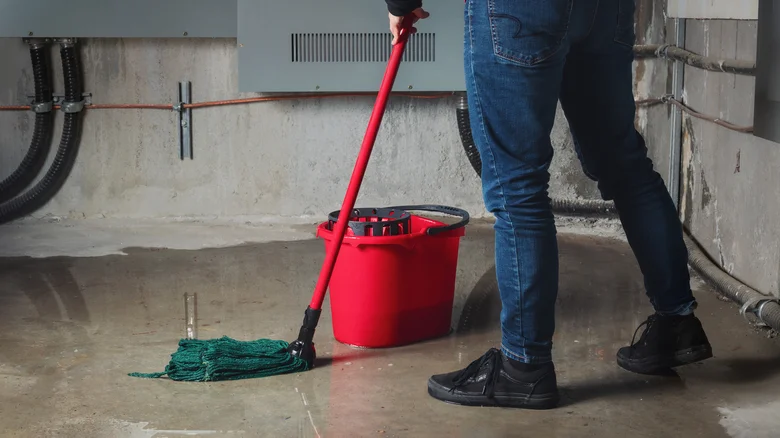
The basement waterproofing industry has more bad actors than almost any home improvement sector. High-pressure sales tactics, oversold solutions, and lifetime warranties from companies that close in five years are all common. This guide gives you the tools to separate legitimate contractors from those to avoid.
Red Flags: Walk Away Immediately
- Door-to-door sales or unsolicited cold calls — legitimate waterproofing companies get work through referrals and advertising, not knocking on doors after heavy rain.
- Same-day decision pressure — “This price is only good today” is a manipulation tactic. Any honest contractor will give you time to compare bids.
- No physical business address — search the company name and verify the address exists. Many fly-by-night operators list a UPS mailbox as their address.
- Cash-only payment requirement — legitimate contractors accept credit cards and checks. Cash-only jobs leave you no recourse if work is defective.
- “Lifetime warranty” from a new company — a warranty is only as good as the company behind it. Ask how long the company has been in business under its current name.
- Diagnosis without entering the basement — any contractor who recommends a $10,000 system without inspecting the exterior, measuring the slope, and checking the actual water entry points is guessing.
Must-Ask Questions Before Signing
About Credentials
- “Are you licensed and insured in [your state]?” — Ask for the license number and verify it on your state’s contractor licensing board website.
- “Are you a member of the Basement Health Association (BHA)?” — BHA membership requires adherence to a code of ethics.
- “Can you provide three local references from projects completed in the past 12 months?” — Then actually call them.
About the Proposed Solution
- “What is causing my basement water problem?” — A good contractor explains the root cause (hydrostatic pressure, window well overflow, plumbing, grading, etc.) before proposing a solution.
- “What happens if this system fails?” — They should have a clear warranty process and a local service team.
- “Will you provide a written scope of work before I sign?” — Everything should be in writing: materials, dimensions, who does the work (them or subcontractors), timeline.
- “What do I do while waiting for installation?” — A good contractor helps you manage the immediate problem.
About the Contract
- “Is there a cancellation period?” — Federal law and most state laws require a 3-day right of rescission on contracts signed in your home. The contract must state this.
- “What is the payment schedule?” — Never pay more than 30–50% upfront. Final payment should be due after your inspection of completed work.
- “Is the warranty transferable if I sell my home?” — A transferable warranty adds value at sale time.
How to Get Multiple Bids the Right Way
Get a minimum of three bids. Do not simply choose the lowest number — compare what is actually included:
| Item to Compare | Why It Matters |
|---|---|
| Linear feet of drain included | Partial perimeter is cheaper but less effective |
| Sump pump brand and model | Ask about HP rating and GPH capacity |
| Battery backup included? | Critical for power outages during storms |
| Who does the work? | Subcontracted crews = less quality control |
| Warranty term and what it covers | “Transferable lifetime” vs. “5-year parts only” |
| Concrete restoration included? | Some quotes exclude floor patching |
National vs. Local Contractor
National chains (Basement Systems, Dry Pro, Ohio Basement Authority) offer standardized products, professional sales processes, and transferable warranties. They tend to cost 20–40% more than local contractors. Local specialists often have lower overhead, faster scheduling, and owners who are on-site. The best outcome is usually a locally-owned company with 10+ years in business and verifiable references.
Before getting quotes, understand typical pricing in your area. See our basement waterproofing cost guide and our French drain cost breakdown so you can identify bids that are significantly above or below market rate.
Leave a Reply